-
Sep30
-
Oct1
-
Oct1
-
Oct2
Web cookies (also called HTTP cookies, browser cookies, or simply cookies) are small pieces of data that websites store on your device (computer, phone, etc.) through your web browser. They are used to remember information about you and your interactions with the site.
Session Management:
Keeping you logged in
Remembering items in a shopping cart
Saving language or theme preferences
Personalization:
Tailoring content or ads based on your previous activity
Tracking & Analytics:
Monitoring browsing behavior for analytics or marketing purposes
Session Cookies:
Temporary; deleted when you close your browser
Used for things like keeping you logged in during a single session
Persistent Cookies:
Stored on your device until they expire or are manually deleted
Used for remembering login credentials, settings, etc.
First-Party Cookies:
Set by the website you're visiting directly
Third-Party Cookies:
Set by other domains (usually advertisers) embedded in the website
Commonly used for tracking across multiple sites
Authentication cookies are a special type of web cookie used to identify and verify a user after they log in to a website or web application.
Once you log in to a site, the server creates an authentication cookie and sends it to your browser. This cookie:
Proves to the website that you're logged in
Prevents you from having to log in again on every page you visit
Can persist across sessions if you select "Remember me"
Typically, it contains:
A unique session ID (not your actual password)
Optional metadata (e.g., expiration time, security flags)
Analytics cookies are cookies used to collect data about how visitors interact with a website. Their primary purpose is to help website owners understand and improve user experience by analyzing things like:
How users navigate the site
Which pages are most/least visited
How long users stay on each page
What device, browser, or location the user is from
Some examples of data analytics cookies may collect:
Page views and time spent on pages
Click paths (how users move from page to page)
Bounce rate (users who leave without interacting)
User demographics (location, language, device)
Referring websites (how users arrived at the site)
Here’s how you can disable cookies in common browsers:
Open Chrome and click the three vertical dots in the top-right corner.
Go to Settings > Privacy and security > Cookies and other site data.
Choose your preferred option:
Block all cookies (not recommended, can break most websites).
Block third-party cookies (can block ads and tracking cookies).
Open Firefox and click the three horizontal lines in the top-right corner.
Go to Settings > Privacy & Security.
Under the Enhanced Tracking Protection section, choose Strict to block most cookies or Custom to manually choose which cookies to block.
Open Safari and click Safari in the top-left corner of the screen.
Go to Preferences > Privacy.
Check Block all cookies to stop all cookies, or select options to block third-party cookies.
Open Edge and click the three horizontal dots in the top-right corner.
Go to Settings > Privacy, search, and services > Cookies and site permissions.
Select your cookie settings from there, including blocking all cookies or blocking third-party cookies.
For Safari on iOS: Go to Settings > Safari > Privacy & Security > Block All Cookies.
For Chrome on Android: Open the app, tap the three dots, go to Settings > Privacy and security > Cookies.
Disabling cookies can make your online experience more difficult. Some websites may not load properly, or you may be logged out frequently. Also, certain features may not work as expected.
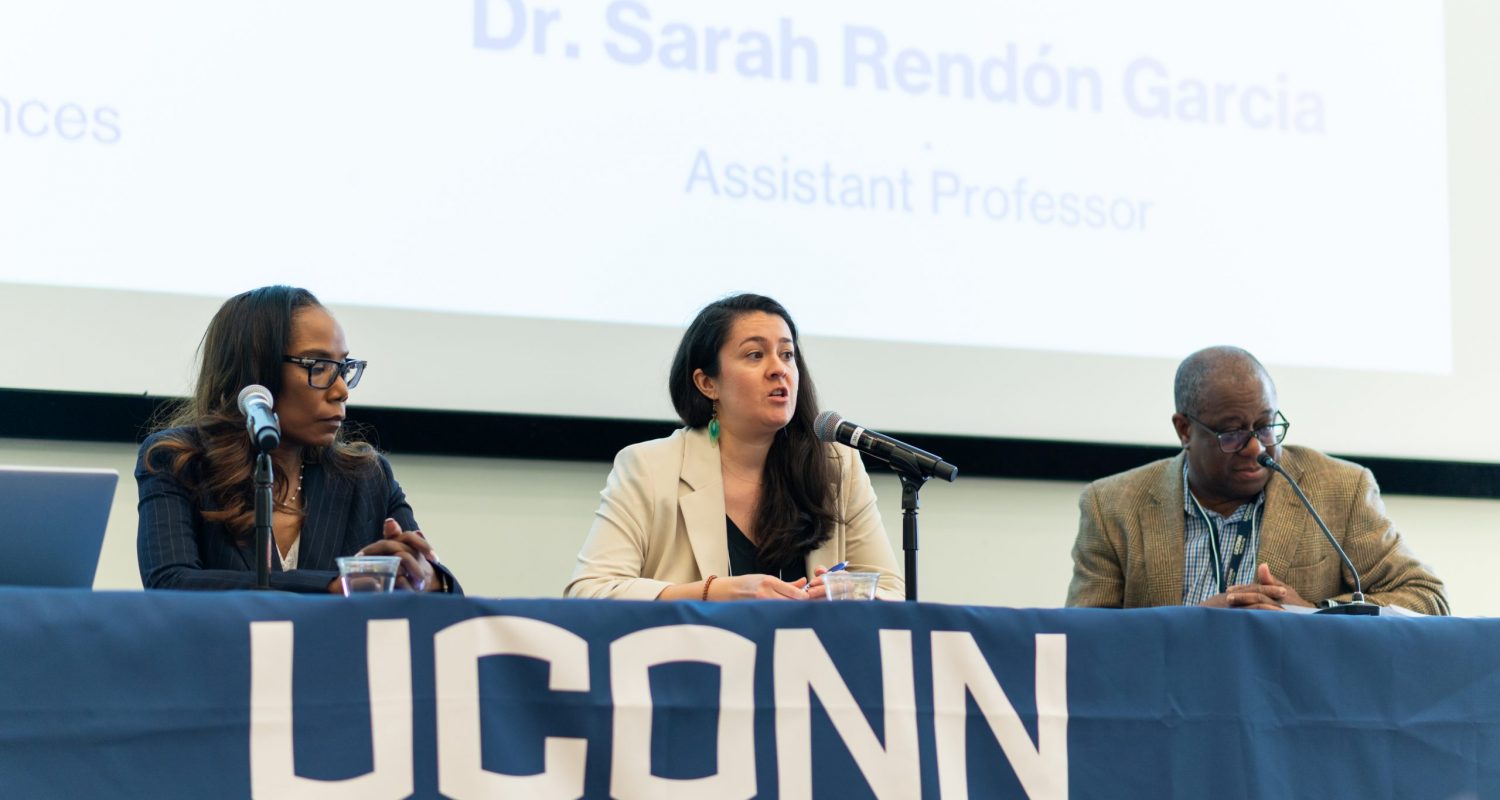



Welcome to the University of Connecticut’s Diversity, Equity, Inclusion, and Justice page! This site will serve as the University’s central hub for diversity, equity, inclusion, and justice (DEIJ) information and initiatives. It will provide resources, opportunities for engagement, and celebrations of the many diverse communities who call UConn “home.”
UConn is committed to diversity, a crucial part of the University's mission. We also believe that diversity makes our campuses better places to learn and work and positions UConn as a state, regional, and local leader in education, research, and outreach. Quite simply, we believe that the diversity of our communities makes UConn stronger.
The important transformational work related to DEIJ will only be successful if the University has buy-in and input from our entire community; no singular department or unit can do this work on its own. This website provides an entry point for every member of the UConn community – whether a student, alumni, staff, faculty, or a member of the surrounding communities, we invite you to join in this important work with us. Together, we can improve the UConn experience for every member of our community.
The University of Connecticut is committed to building a safe and inclusive community for all its members through diversity, equity, and inclusion (DEI). Under the guidance of the Vice President, Dr. Jeffrey Hines, we as members of the UConn community aim to listen, reflect, learn, and act to make our community safe and a place of belonging for all. We aim to support diversity, equity, and inclusion by offering support for success for people of all backgrounds.
We would like to begin by acknowledging that the land on which we gather is the territory of the Eastern Pequot, Golden Hill Paugussett, Lenape, Mashantucket Pequot, Mohegan, Nipmuc and Schaghticoke Peoples who have stewarded this land throughout the generations. We thank them for their strength and resilience in protecting this land, and aspire to uphold our responsibilities according to their example.
Pronunciations: Eastern Pequot (Pea-kwaht); Golden Hill Paugussett (paw-GUS-it); Lenape (Leh-NAH-pay); Mashantucket Pequot (Mash-un-tuck-it Pea-kwaht); Mohegan (Mo-he-gan); Nipmuc (Nip-muck); Schaghticoke (ska-teh-COKE)



To the UConn Community: The Office for Inclusion and Civil Rights (OICR) and the Provost’s Office would like to remind you of several celebrations, commemorations, and moments of raising awareness for members of our community during the month of September: Heritage Month Celebrations: National Recovery Month: September is National Recovery Month, which promotes and celebrates […]
[Read More]To the UConn Community: The Office for Inclusion and Civil Rights (OICR) and the Provost’s Office would like to remind you of several celebrations, commemorations, and moments of raising awareness for members of our community during the month of August: Awareness Month Celebrations: Purple Heart Month: Observed each August, Purple Heart Month honors U.S. military service members who have […]
[Read More]To the UConn Community: The Office for Inclusion and Civil Rights (OICR) and the Provost’s Office would like to remind you of several celebrations, commemorations, and moments of raising awareness for members of our community during the month of July: Heritage Month Celebrations: Disability Pride Day (July 26) and Month: In the United States, Disability Pride Month is celebrated in July […]
[Read More]Error: No connected account.
Please go to the Instagram Feed settings page to connect an account.