Web cookies (also called HTTP cookies, browser cookies, or simply cookies) are small pieces of data that websites store on your device (computer, phone, etc.) through your web browser. They are used to remember information about you and your interactions with the site.
Purpose of Cookies:
Session Management:
Keeping you logged in
Remembering items in a shopping cart
Saving language or theme preferences
Personalization:
Tailoring content or ads based on your previous activity
Tracking & Analytics:
Monitoring browsing behavior for analytics or marketing purposes
Types of Cookies:
Session Cookies:
Temporary; deleted when you close your browser
Used for things like keeping you logged in during a single session
Persistent Cookies:
Stored on your device until they expire or are manually deleted
Used for remembering login credentials, settings, etc.
First-Party Cookies:
Set by the website you're visiting directly
Third-Party Cookies:
Set by other domains (usually advertisers) embedded in the website
Commonly used for tracking across multiple sites
Authentication cookies are a special type of web cookie used to identify and verify a user after they log in to a website or web application.
What They Do:
Once you log in to a site, the server creates an authentication cookie and sends it to your browser. This cookie:
Proves to the website that you're logged in
Prevents you from having to log in again on every page you visit
Can persist across sessions if you select "Remember me"
What's Inside an Authentication Cookie?
Typically, it contains:
A unique session ID (not your actual password)
Optional metadata (e.g., expiration time, security flags)
Analytics cookies are cookies used to collect data about how visitors interact with a website. Their primary purpose is to help website owners understand and improve user experience by analyzing things like:
How users navigate the site
Which pages are most/least visited
How long users stay on each page
What device, browser, or location the user is from
What They Track:
Some examples of data analytics cookies may collect:
Page views and time spent on pages
Click paths (how users move from page to page)
Bounce rate (users who leave without interacting)
User demographics (location, language, device)
Referring websites (how users arrived at the site)
Here’s how you can disable cookies in common browsers:
1. Google Chrome
Open Chrome and click the three vertical dots in the top-right corner.
Go to Settings > Privacy and security > Cookies and other site data.
Choose your preferred option:
Block all cookies (not recommended, can break most websites).
Block third-party cookies (can block ads and tracking cookies).
2. Mozilla Firefox
Open Firefox and click the three horizontal lines in the top-right corner.
Go to Settings > Privacy & Security.
Under the Enhanced Tracking Protection section, choose Strict to block most cookies or Custom to manually choose which cookies to block.
3. Safari
Open Safari and click Safari in the top-left corner of the screen.
Go to Preferences > Privacy.
Check Block all cookies to stop all cookies, or select options to block third-party cookies.
4. Microsoft Edge
Open Edge and click the three horizontal dots in the top-right corner.
Go to Settings > Privacy, search, and services > Cookies and site permissions.
Select your cookie settings from there, including blocking all cookies or blocking third-party cookies.
5. On Mobile (iOS/Android)
For Safari on iOS: Go to Settings > Safari > Privacy & Security > Block All Cookies.
For Chrome on Android: Open the app, tap the three dots, go to Settings > Privacy and security > Cookies.
Be Aware:
Disabling cookies can make your online experience more difficult. Some websites may not load properly, or you may be logged out frequently. Also, certain features may not work as expected.
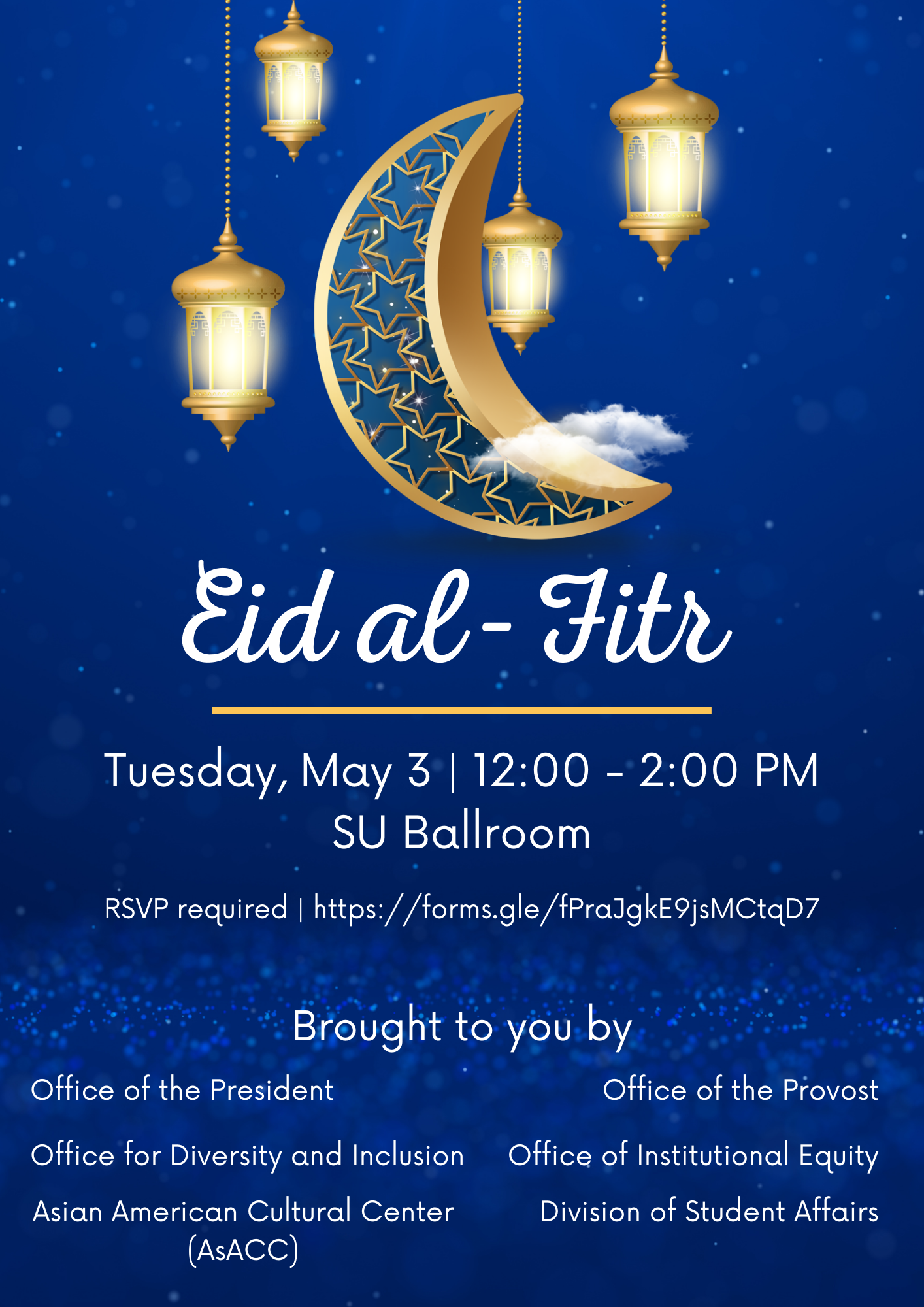
This in-person event will be held on Tuesday, May 3, in the SU Ballroom. It is limited to 200 people, so please RSVP.
This celebration is brought to you by the Office of the President, the Office of the Provost, the Office for Diversity and Inclusion, the Office of Institutional Equity, the Division of Student Affairs, and the Asian American Cultural Center (AsACC).
The UConn Human Rights Symposium is bringing Harvard Law School's Dr. Lisa Dicker and the University of New Haven's Dr. Olena Lennon to discuss the ongoing war in Ukraine this Thursday afternoon.
Dr. Lennon will focus on breaking down the conflict with respect to military developments, the humanitarian situation, and root causes of the crisis. Dr. Dicker will draw from her experience at Harvard's Negotiation & Mediation Clinical Program to help us understand the negotiation process central to future conflict resolution in this crisis.
The event will be in-person in MCHU 302 beginning at 6:30pm on Thursday, 4/21/22. Folks can submit questions for the event's speakers here and RSVP here, though RSVP is not required for attendance.
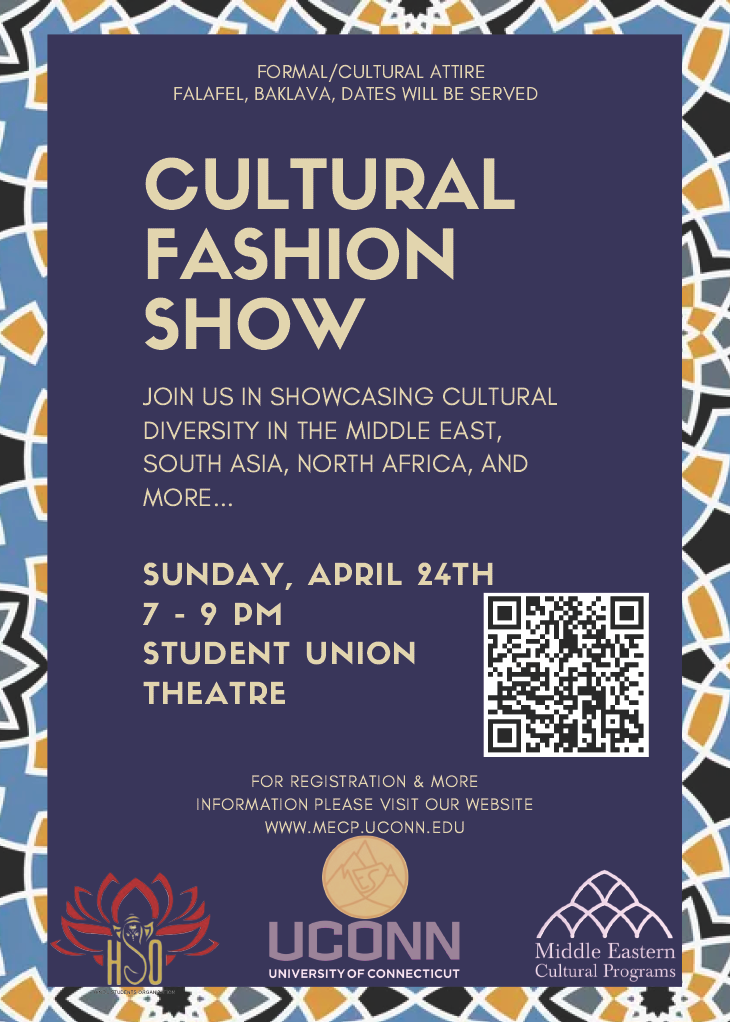
The Middle Eastern Cultural Program invites you to the Cultural Fashion Show!
The night is to celebrate the beauty of all cultures, from the Middle East, South Asia, North Africa, and more, through music, fashion, and dance. Falafel, baklava, tea, and dates will also be served for free.
This in-person event is free for all students. It will be held on Sunday, April 24th, from 7:00 to 9:00 PM in the Student Union Theater. You can register for the event through Eventbrite. You can also sign up to be featured on our catwalk representing cultural clothing.
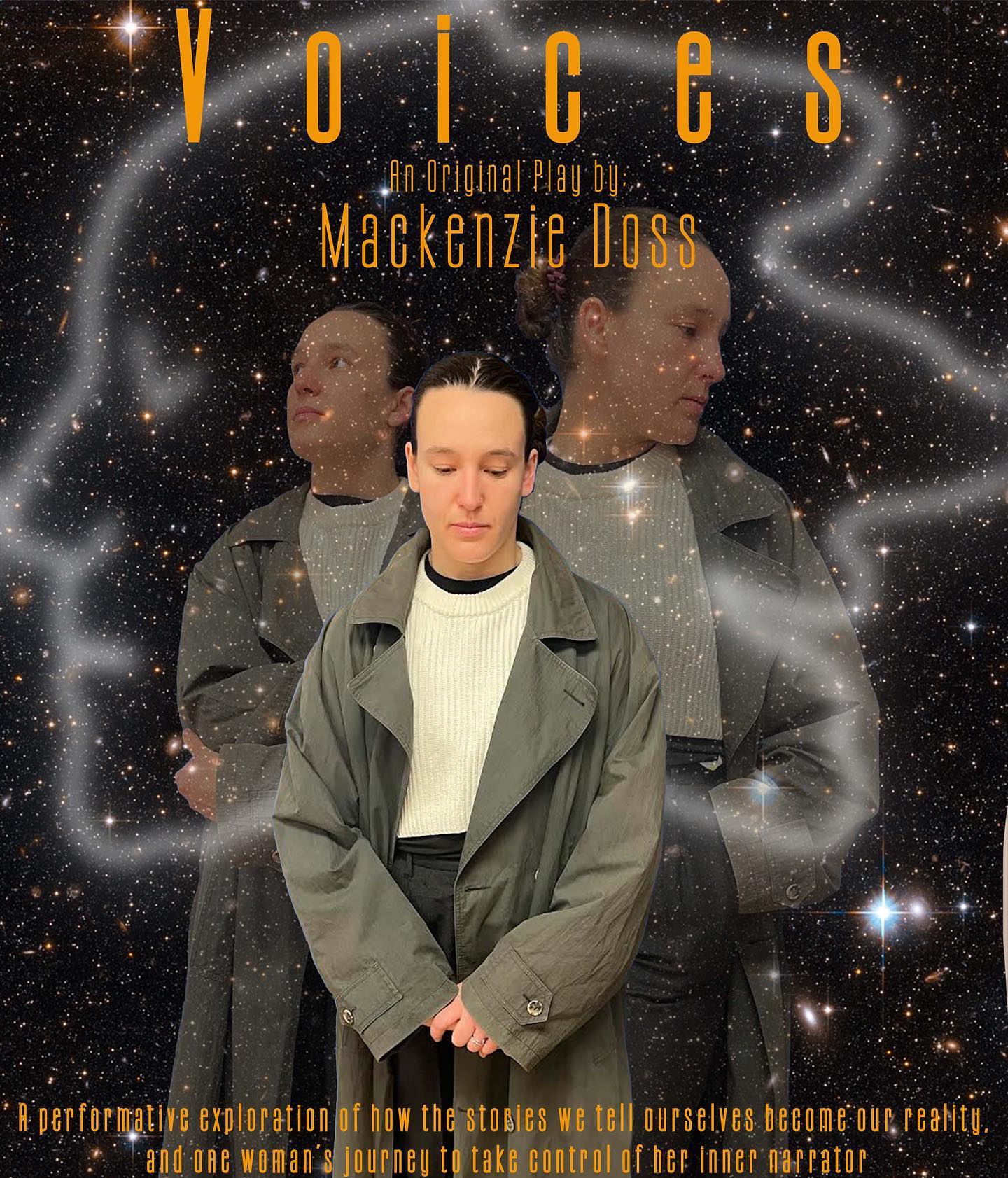
Voices explores how the stories we tell ourselves often become our reality, and one woman’s journey to take control of her inner narrator and breathe life into new identities. Voices incorporates puppetry representing how we can speak to ourselves in ways both gentle and violent, and how that language colors our lives. Join Sarah, a down-on-her-luck journalist who finds herself alone with her thoughts in a mic night venue she’s supposed to be writing about in a few hours’ time. Cue the “voices.” The audience enters the ethereal and abstract world of Sarah’s mind as she navigates her mental landscape in search of shelter.
Tickets for Voices will be pay-what-you-can, with all proceeds to be given to the UCONN Women's Centers' 100 Years of Women Scholarship Fund. The Scholarship supports an incoming UConn student, or current student who, as a role model or advocate, has advanced the role and contributions of women in society. What better way to spend a night out than entertainment and enrichment? We lift each other in our own ways as best we can and hope you’ll join us for a night of abstract theatre in support of a deserving student’s continued education. Recommended for ages 12+. Seating will be cafe style and will be first come, first served. Tickets are available athttps://bimp.ticketleap.com/voices/dates
WGSS and the Women's Center invite you to "From Childhood Sexual Abuse to Campus Sexual Assault: Black Feminist Perspectives," a panel discussion event for Sexual Awareness and Prevention Month.
Long-time Black feminist activists, artists, national thought leaders, and youth program builders will discuss their work in the anti-sexual violence movement and how to support multi-time survivors of sexual violence. Joanne N. Smith is the founder of Girls for Gender Equity and co-founder of Black Girl Freedom Fund. Aishah Shahidah Simmons is the director and filmmaker of NO! The Rape Documentary and editor of Love with Accountability: Digging Up the Roots of Child Sexual Abuse.
This panel discussion will include ASL interpretation and captioning services. Please contact the Women's Center at 860-486-4738 or womenscenter@uconn.edu with any accommodation inquiries at least 5 days in advance of the event.
UConn has several resources dedicated to researching and raising awareness about neurodiversity, as well as providing support to neurodiverse members of our community:
Beyond Access (BA), a fee-for-service program that offers students resources, strategies, and technologies to enhance their learning experience.
The Autism Awareness Club, a student organization dedicated to increasing knowledge about autism spectrum disorders by reaching out to both students on campus and members of the local communities.
The Early Detection Laboratory, a research center dedicated to improving the early identification of Autism Spectrum Disorder (ASD), the developmental trajectory of those with ASD, and the provision of early intervention services
The Women's Center, Asian American Cultural Center, and USG invite you to a talk given by Chanel Miller, an artist, writer, and author of Know My Name.
First known publicly as Emily Doe, Miller is the survivor of the Stanford University sexual assault case that exposed the harsh reality of what many victims face. Her assailant, Brock Turner had been sentenced to just six months in county jail after he was found sexually assaulting her on Stanford's campus. Her victim impact statement was posted on BuzzFeed, where it instantly went viral—viewed by eleven million people within four days, it was translated globally and read on the floor of Congress; it inspired changes in California law and the recall of the judge in the case. Thousands wrote to say that she had given them the courage to share their own experiences of assault for the first time. Now she reclaims her identity to tell her story of trauma, transcendence, and the power of words.